Air filtration: MERV and HEPA
A filter only cleans the air that passes through it. Choosing one is less about finding the strongest filter and more about matching capture level to the airflow a system can sustain.

What MERV actually measures
MERV stands for Minimum Efficiency Reporting Value. It is a scale that describes how effectively a filter captures particles across a range of sizes — the higher the number, the smaller the particles it reliably traps. A low-MERV filter mostly catches lint and large dust; a higher-MERV filter also captures finer particles such as smoke and many airborne irritants.
| MERV range | Typically captures | Common setting |
|---|---|---|
| 1–4 | Large dust, lint, fibres | Basic equipment protection |
| 5–8 | Mould spores, dust mite debris | Many residential furnaces |
| 9–12 | Fine dust, some smoke particles | Higher-grade residential |
| 13–16 | Smoke, fine airborne particles | Capable systems only |
The trade-off no one mentions on the box
A denser filter captures more, but it also resists airflow more. If you fit a high-MERV filter into a furnace blower that was not designed for it, the system has to work harder to pull air through. That can reduce the total volume of air being filtered, strain the equipment, and in some cases make the whole house less ventilated rather than cleaner.
Practical point: the right filter is the highest rating your specific system can move air through without struggling. The equipment documentation or an HVAC technician can confirm what a given furnace is rated to handle.
Where HEPA fits
HEPA — high-efficiency particulate air — describes a much stricter standard than typical furnace filters reach. True HEPA filters capture a very high proportion of extremely fine particles. Because they resist airflow heavily, they are usually found in portable room air purifiers with their own fans, rather than dropped into a standard forced-air furnace.
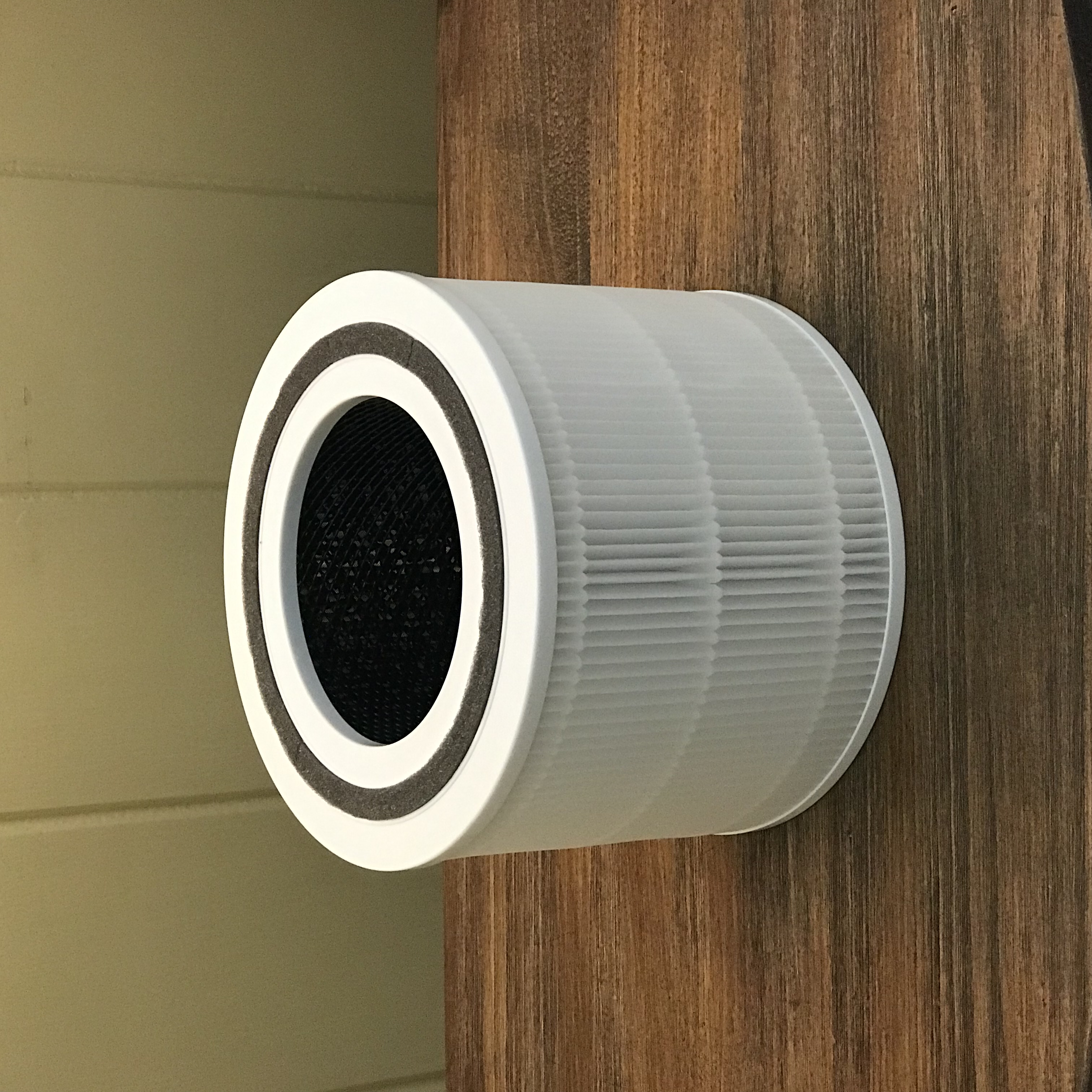
Many portable units pair a HEPA layer with activated carbon. The HEPA layer handles particles; the carbon layer is aimed at odours and certain gases. They address different things, which is why they are often stacked together.
A simple maintenance habit
- Check forced-air furnace filters on a regular schedule and replace them when they look loaded with dust.
- A clogged filter restricts airflow, so changing it on time protects both air quality and the equipment.
- Match the replacement to the size and rating your system is built for rather than the highest number available.
- For portable HEPA units, follow the manufacturer's stated replacement interval for the cartridge.
Filtration is only half the picture
Filters remove particles from air that is already indoors. They do not bring in fresh outdoor air or remove humidity and carbon dioxide on their own. That is the job of ventilation — covered in the companion article on heat recovery ventilation. The two work together: ventilation supplies and exchanges air, and filtration cleans what circulates.